This post should really be titled “A Long Road to the Point.” Mosey with me while I move toward today’s immigration protests.
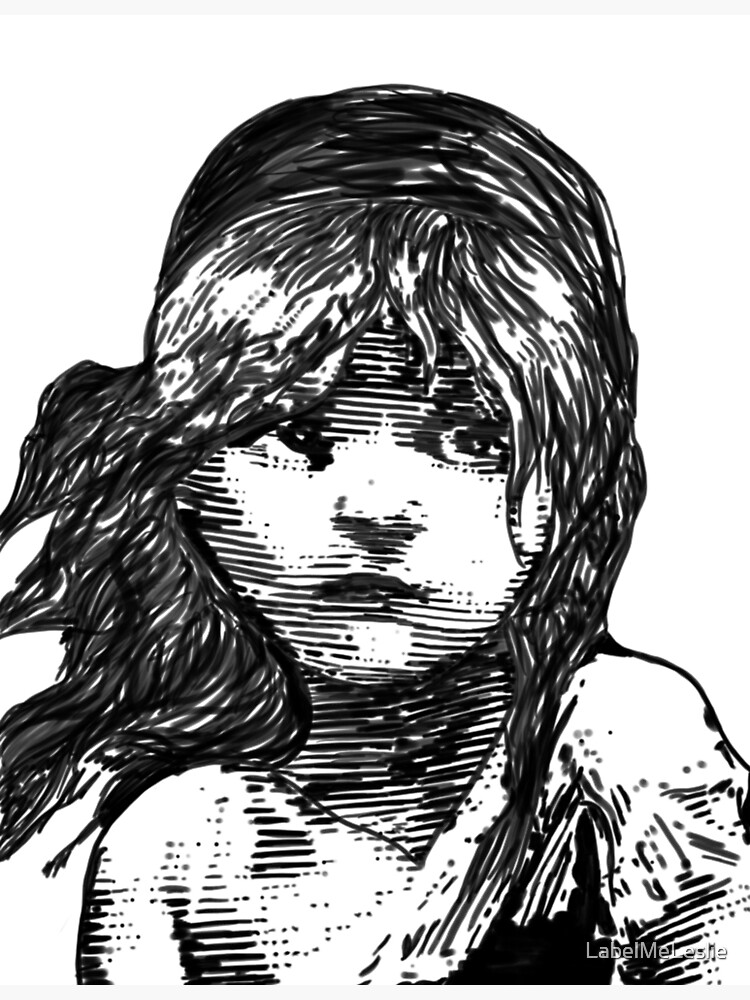
Les Mis
I’ve always wanted to write a book about Musicals and the Law. The most I’ve done, so far, is an essay on Hamilton and a reference to Jean Valjean in my first law review essay (p. 229 for the curious).
But I’m going to imagine myself the most qualified person to weigh in on Trump going to Les Mis at my beloved Kennedy Center last night, which also ties right in with the immigration protests sweeping the nation (I did not have Spokane on my list of likely protest sites).
Because it is all about the rule of law and justice. Or, critically the rule of law versus justice.
We all love Valjean. We are meant to, of course. He is the most brilliant rhetorical example ever of how to frame a bad act:
- The reason for the act: he stole a loaf of bread for his hungry family members. A+ level justification.
- The casting of the act in a broader, overwhelming narrative of love and sacrifice. A+ level minimization.
And we fault Javert for refusing to buy into Victor Hugo’s rhetorical tricks. How could he? Because Javert defined his identity as an upholder of the law. Yes, the gap between law and ordinary morality was awfully wide in 19th century France, but Javert knew he did not have the authority to question that. His job was to implement the law as written. Doing otherwise would destroy his sense of self–and indeed, when he did question that, he was destroyed. Our sense of our selves is that powerful, and when we realize all we have held close and dear is wrong, that is a grief that can’t be spoken.
Right, right, we all know this. Please move on from 10th grade English class, Prof.
The Power of “Except When”
Some things we just know to be true. When someone walks in the door soaking wet, it’s raining outside. When a kid comes to your front door in costume, it’s Halloween. We fill in the things we propose are true using things we understand about the world, i.e. making inferences. One way to test the inferences is by adding “except when” (or “especially when,” but I don’t want to dwell on that here). It upends everything we think we know.
When someone walks in the door soaking wet, it’s raining outside, except when they had to dodge a sprinkler system to get inside. When a kid comes to your front door in costume, it’s Halloween, except when you live next door to an Encanto-obsessed toddler. (Hola, Mirabel!)
- When someone steals a loaf of bread, they are a criminal. (Javert)
- …except when they did it out of duty to a higher law: keeping family members alive. (Us)
- When someone breaks out of jail, they are a criminal. (Javert)
- Us: …except when the sentence was out of all proportion to the crime and involved torture. (Us)
Javert isn’t wrong, he is just incomplete. And there is a whole body of philosophical writing about the law to suggest he has strong reasons to believe he has no right to do that “except when” thinking. But we all do it all the time. Here are a few of mine: driving in the turn-lane to pass traffic is an asshole move except when it’s 7:59 and you want to cast your vote for Obama and you are late from working the polls all day (true story, and the rest is here1 because it is too good not to tell). Eating cookies all day is bad for your health, except when it is helping you quit smoking (sigh). Repeating a story is boring, except when your audience has dementia and you know they will love it (double, triple, quadruple sigh).
And About These Immigration Protests
Interfering with law enforcement is bad.
- Except when the arrests are being made without reasonable suspicion, just based on the fact of people being brown and being day laborers (not good enough, and I’ve litigated that one specifically so I know exactly what I am talking about, hello ICE raid at the 7-11 in Fells Point back in the day).
- Except when the likelihood of the remainder of the process being respected is so remote. One of my angriest moments in these past months happened when I heard a former ICE official last week telling people “listen, don’t interfere with arrests. If something is wrong with the arrest, the courts will sort it out.” Pure, utter bullshit, as he well knows. Immigration courts are hostile to any Fourth Amendment challenges. And too often now, those arrested have no hearing at which to make the challenge2. Let alone access to lawyers at any hearing they might have.
- Except when the detained person is denied due process altogether. Immigrants have the right to contest their removal in immigration courts, unless they have been here less than two years. Even for that subset of relatively recent arrivals, they can access immigration court if they have a fear of returning to their country. But how do you show that you have been here two years or more when ICE is shuttling you through detention facility after detention facility, with complicated (at best) access to phone calls to family members to access documents? How do you state your fear when ICE does not want to listen? How does anyone reliably show these systemic violations when the victims are deported so quickly? (The stories are out there, but at this point are mostly anecdata.)
All of these “except whens” are pretty much inarguable. If respecting the law is the paramount concern, then it is must equally be the concern of those enforcing the law. When they disobey the law, the entire moral basis justifying their actions erodes. Constitutional protections are law. Restrictions on the power of law enforcement are law. Law cannot ever simply be the duty of the civilian to uphold; it must always and equally be the duty of the enforcer to honor the constitution and to uphold the constraints the law has placed upon their exercise of power. Anything else is rotten.
No, it is more than rotten. When law enforcement is itself not subject to law, that is tyranny in its purest form.
But let me add the “except when” that is a lot harder, and where people may disagree. It’s the “except when” that ultimately broke Javert.
A Little Moral Philosophy
Interfering with law enforcement is bad, except when the law itself is immoral. Again, solid body of legal philosophy asserting that we cannot individually determine which laws we abide by based on our own sense of morality. The higher the moral stakes, though, the weaker these philosophies are. Nobody has addressed this more thoughtfully and effectively than Dr. King himself in his Letter from Birmingham Jail.
Now, what is the difference between the two? How does one determine when a law is just or unjust? A just law is a man-made
code that squares with the moral law, or the law of God. An unjust law is a code that is out of harmony with the moral law. To
put it in the terms of St. Thomas Aquinas, an unjust law is a human law that is not rooted in eternal and natural law. Any law that uplifts human personality is just. Any law that degrades human personality is unjust.
Unfortunately for those of who like bright lines, we are all going to have slightly different views as to what squares with moral law, just as we all have our our own moral compasses which share so much universally but which diverge in the particulars. Fortunately, civil disobedience allows us to be true to our own definitions and particularities, while accepting the consequences for making our individual choices. Indeed, civil disobedience is rooted in an acceptance of the consequences for that disobedience.3
Choosing when to disobey is phenomenally complicated, and something I think about a lot, thus far without the clarity I want and need. But I took the right lessons from Les Mis when I heard it first on that glorious double-cassette in the 80s: Don’t be Javert. Law is not inherently moral. And sometimes we need to rise up in disobedience to see a world reborn.
*****
- So yeah, I’d been working at a poll in Northern Virginia all day, and needed to vote by 8. I left at 6, but getting into Maryland is as hard today as it was for the confederates in the 1860s. So I sped along the center turn lane as the clocked ticked toward 7:58 and WTOP was doing its traffic report, 7:59 and they are updating us about all their broadcast signals. And I turned left on red into my polling site’s parking lot just as the broadcaster said “it’s eight o’clock and polling locations are closing now in…” I screeched to a halt, threw open the car door and literally fell out in my hurry, at which point the kindest, calmest man standing outside the entry looked at me on the ground strumbling to get up (I’m arthritic, it ain’t easy) and said “it is eight o’clock, you are in line, you may vote.” I STILL LOVE THAT MAN whoever he was. ↩︎
- Either they are being subjected to expedited removal because the government has asserted they are here less than two years, or they are given a confusing document to sign (not in their native language) that waives their right to a hearing. ↩︎
- Civil Disobedience, Stanford Encylopedia of Philosophy, at https://plato.stanford.edu/entries/civil-disobedience/ ↩︎
 Resilient Again
Leave a comment